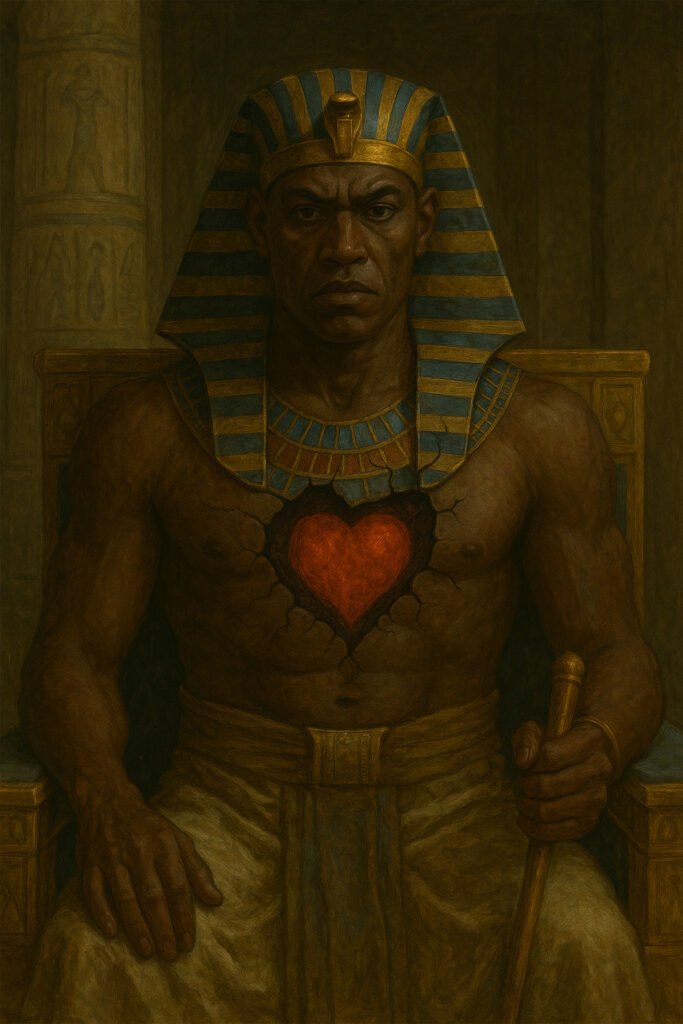
Intro: Pharaoh’s Heart Hardened, Aaron’s Rod, and the River Turned to Blood
Exodus 7 is a turning point in the story of Israel’s deliverance. In this chapter, God shows His authority over Pharaoh, Egypt’s magicians, and even the Nile River itself. The signs begin with Aaron’s rod cast before Pharaoh, which turned to a serpent and swallowed the rods of Egypt’s magicians. Yet, Pharaoh’s heart was hardened, and he refused to yield. God then brought judgment by commanding Aaron to stretch out his rod, and the Nile River was struck — its waters turned to blood, the fish died, and the river stank. This first plague directly confronted Egypt’s gods and their dependence on the Nile, showing that only Yahweh is truly sovereign. Read the full chapter of Exodus 7 (KJV).
Aaron’s Rod Turned to a Serpent
When Pharaoh demanded a sign, God directed Moses to tell Aaron to cast down his rod. Aaron obeyed, and Aaron’s rod turned to a serpent before Pharaoh and his court (Exodus 7:9–10). Pharaoh’s magicians, using their enchantments, mimicked the miracle, but Aaron’s serpent swallowed theirs (Exodus 7:12). This moment revealed that while human power can imitate God’s works, it cannot overcome them. The victory of Aaron’s rod over the magicians’ rods demonstrated that the authority of Israel’s God was supreme.
Pharaoh’s Heart Hardened
Despite witnessing this undeniable sign, Pharaoh’s heart was hardened. The text emphasizes repeatedly that Pharaoh refused to listen, fulfilling God’s warning to Moses that Pharaoh would resist until God’s power was fully displayed (Exodus 7:13). The hardening of Pharaoh’s heart becomes a central theme in the Exodus narrative. It highlights both human rebellion against God and the way God uses such rebellion to magnify His glory through judgment and deliverance.
The River Turned to Blood
God’s next act of judgment struck at the very heart of Egypt’s life — the Nile River. He commanded Aaron to stretch out his rod over the waters, and all the water in Egypt turned to blood (Exodus 7:20). The fish died, the river stank, and the people could not drink its water. Egypt’s magicians attempted to replicate this plague, but they could not reverse it. For seven days, the land suffered from this disaster. By targeting the Nile, God exposed the weakness of Egypt’s gods, who were thought to control fertility, crops, and water. This plague showed that Egypt’s source of power and prosperity was subject to Yahweh alone.
The Significance of the First Plague
The sign of Aaron’s rod turned to a serpent and the plague of the Nile turned to blood were not random acts. They were carefully chosen demonstrations of God’s supremacy:
- The serpent was a symbol of Egyptian power, often associated with Pharaoh himself. Aaron’s rod consuming the others showed God’s superiority over Pharaoh’s authority.
- The Nile was Egypt’s lifeline, worshiped as a god. By turning its waters to blood, God displayed His judgment against Egypt’s idols and His control over creation.
- Each sign underscored that Pharaoh’s heart hardened not because of lack of evidence, but because of rebellion and pride.
Lessons for Today
Exodus 7 reminds us that signs and wonders alone cannot change a hardened heart. Pharaoh saw God’s power yet resisted. The true lesson is that obedience and humility are needed to respond to God’s authority. Just as Aaron’s rod prevailed and the Nile’s power was broken, so too does God reveal His supremacy over all earthly powers and false gods.
Conclusion: God’s Power Over Pharaoh
The narrative of Exodus 7 sets the stage for the escalating plagues that will follow. Aaron’s rod turned to a serpent, the river turned to blood, and yet Pharaoh’s heart was hardened. These events remind us that God alone is sovereign, and His purposes will stand even against the mightiest rulers and nations.
Visit our Exodus summary chapters 7 through for Chapters for an overview of the first chapters of Exodus and more insights into God’s deliverance of His people.