Exodus 31 Summary: Bezalel, Aholiab, and the Sabbath Command
This Exodus 31 summary highlights how Exodus 31 concludes God’s instructions for the Tabernacle by appointing the craftsmen who would construct its sacred items, empowering them with the Spirit of God, and emphasizing the Sabbath as a perpetual covenant. This Exodus 31 summary shows how God not only gave Israel detailed commands for worship but also provided the people, skills, and spiritual authority required to fulfill them.
For the broader context of the Tabernacle instructions, see the Holy Instructions for the Tabernacle and Priesthood for Israel (Exodus 25–31) hub page.
Read the chapter itself here: Exodus 31 KJV.
Bezalel: Filled With the Spirit of God for Craftsmanship
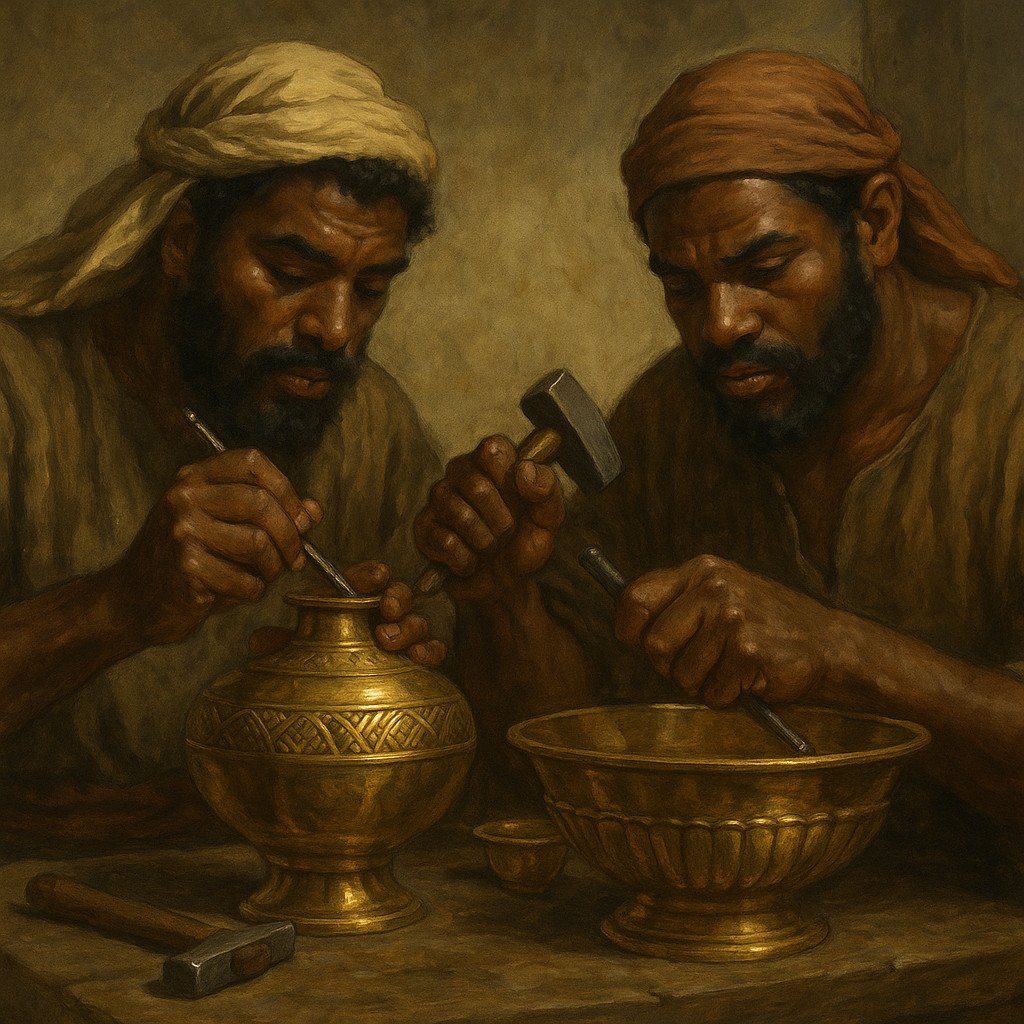
God chooses Bezalel, of the tribe of Judah, to oversee the construction of the Tabernacle and all its vessels. God says He has filled him with the Spirit of God, giving him:
- Skill in all manner of workmanship
- Understanding
- Wisdom
- Knowledge
These gifts enabled Bezalel to work in gold, silver, bronze, precious stones, wood, and fine craftsmanship. He became the master artisan responsible for turning God’s commands into physical reality.
This chapter marks one of the earliest biblical references to someone being filled with the Spirit for a specific ministry task.
Aholiab: Divinely Appointed Assistant
Bezalel is not alone. God appoints Aholiab, of the tribe of Dan, as his assistant. Together, they and others with God‑given skill would:
- Craft the Tabernacle
- Build the Ark of the Testimony
- Create the mercy seat
- Form the table, lampstand, altars, and laver
- Prepare priestly garments
- Develop the anointing oil and incense
All work was to be done exactly as God commanded on Mount Sinai. Their craftsmanship served as an act of worship.
A Spirit‑Empowered Workforce
God declares that He placed wisdom in the hearts of “all that are wise‑hearted.” These individuals were not merely talented; they were spiritually equipped to perform the holy work.
Their tasks included making:
- The tent of meeting
- The ark and mercy seat
- The table of showbread
- The menorah
- The altars of incense and burnt offering
- The laver and its base
- The priestly garments
- The anointing oil and incense
This section highlights that every tool and garment required for worship was crafted under divine direction.
The Sabbath Command: A Perpetual Sign
After listing the craftsmen and their assignments, God reiterates the importance of the Sabbath. Israel was to keep it as an eternal sign of the covenant.
Key points include:
- The Sabbath distinguished Israel as God’s people.
- Anyone who profaned it was subject to death.
- No work was to be done on the seventh day.
- It was a day of rest, mirroring God’s rest after creation.
This shows that even the holy work of building the Tabernacle could not override the Sabbath. Devotion to God required obedience to His rhythms.
The Tablets of Stone
The chapter ends dramatically: God gives Moses two tablets of testimony, written with the finger of God Himself.
These tablets contained the foundational commandments of the covenant, serving as the divine record of Israel’s relationship with God. Their divine authorship underscores their authority and marked the covenant as directly established by God rather than by human tradition. These tablets symbolized permanence, responsibility, and the weight of divine law in Israel’s life.
Closing Notes: Exodus 31 Summary
This Exodus 31 summary shows God equipping specific individuals with spiritual gifts to complete His holy work. Bezalel and Aholiab were not chosen for natural talent alone, but for God‑given wisdom and skill. Their work, combined with the renewed emphasis on the Sabbath and the giving of the tablets, brings the Tabernacle instructions to a perfect and complete conclusion. It also prepares the reader for the dramatic events of Exodus 32, where Israel’s failure contrasts sharply with God’s careful provision, highlighting the need for faithful obedience to the One who equips, commands, and sanctifies His people.