 Skip to content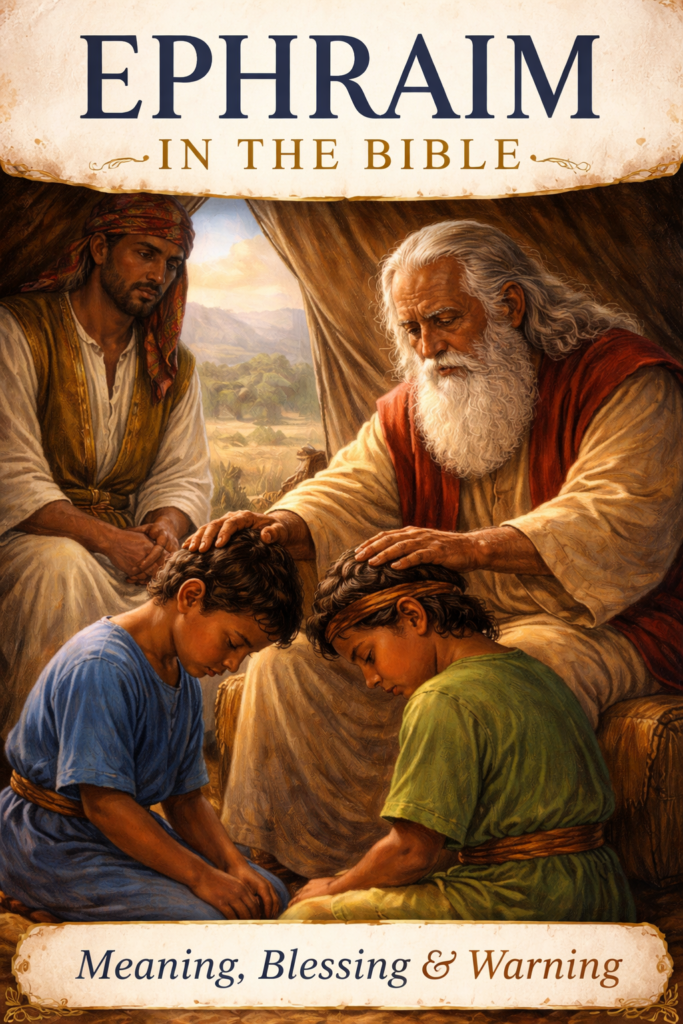
The Sermon on the Mount blessed are the poor in spirit. And Ephraim is the result of Joseph being humbled to then be brought to prominence in Egypt and naming his son to commemorate his story.
Ephraim in the Bible is more important than many readers first realize. He was not only the younger son of Joseph, but also the forefather of one of the most influential tribes in Israel. His story begins in Genesis, but it stretches far beyond Genesis into the history of Israel, the prophets, and the warnings given to the northern kingdom.
What makes Ephraim especially memorable is that God allowed him to be linked with both fruitfulness and failure. On the one hand, Ephraim’s very name points to blessing. On the other hand, later passages show Ephraim as a symbol of pride, idolatry, and rebellion. That combination makes this one of the more powerful character studies in Scripture. Ephraim in the Bible teaches us that a person or people can receive great favor, yet still be responsible to walk faithfully before God.
Who Was Ephraim in the Bible?
Ephraim was the second son of Joseph and Asenath, born in Egypt during the years of plenty before the famine became severe. Joseph named him Ephraim because, as Genesis 41:52 says in the KJV, “God hath caused me to be fruitful in the land of my affliction.”
That alone makes Ephraim’s beginning remarkable. Joseph had been hated by his brothers, sold into slavery, falsely accused, and cast into prison. Yet God raised him up in Egypt. Ephraim’s name became part of Joseph’s testimony. In other words, the child’s name was a memorial of what God had done.
So when we first meet Ephraim in the Bible, we are not just meeting Joseph’s son. We are meeting living proof that God can bring fruit out of suffering.
What Does the Name Ephraim Mean?
The name Ephraim is tied to fruitfulness. Joseph said God had made him fruitful in the land of his affliction. That is a deep statement. Joseph was still in the same land where he had suffered, yet he could already see the hand of God turning sorrow into increase.
This is one of the strongest spiritual lessons attached to Ephraim in the Bible. Sometimes God does not remove affliction immediately. Sometimes God causes fruit to come out of affliction. Joseph’s life shows that clearly, and Ephraim’s name preserves that lesson.
The name also fits what would later happen to the tribe of Ephraim. Ephraim became numerous, influential, and prominent in Israel. The blessing attached to the name was not empty. It unfolded in history.
Ephraim and Manasseh: Why Did Jacob Cross His Hands?
The defining moment in Ephraim’s story comes in Genesis 48. When Jacob was near death, Joseph brought Manasseh and Ephraim to him for a blessing. Since Manasseh was the firstborn, Joseph placed him near Jacob’s right hand. Ephraim, the younger, was placed near the left.
But Jacob crossed his hands.
He deliberately put his right hand on Ephraim and his left on Manasseh. Joseph tried to correct him, but Jacob refused. He knew exactly what he was doing. Genesis 48:19 says, “his younger brother shall be greater than he, and his seed shall become a multitude of nations.”
This scene matters because it fits a larger pattern in Genesis. Again and again, God overturns human expectations. Abel is accepted over Cain. Isaac is chosen over Ishmael. Jacob is blessed over Esau. Now Ephraim is set before Manasseh.
The message is not that birth order never matters. The message is that God is not bound by human custom. God chooses according to divine purpose.
Why Was Ephraim So Important in Israel?
Ephraim did not remain only the name of one man. He became the name of a tribe, and that tribe became one of the strongest in Israel.
Joshua, the leader who brought Israel into the Promised Land after Moses, came from Ephraim. The tribe received a central inheritance in the land. Over time, Ephraim grew so prominent that sometimes the prophets used the name “Ephraim” to refer to the whole northern kingdom of Israel.
That tells you how great Ephraim’s influence became.
So when someone asks about Ephraim in the Bible, the answer has two layers. First, Ephraim was Joseph’s younger son. Second, Ephraim became a tribal name that eventually stood for national strength, leadership, and later national corruption.
That double meaning is one reason this topic is so important to explain carefully.
Ephraim in the Prophets: Blessing Turned into Warning
Later in Scripture, Ephraim becomes a tragic example. The prophets speak of Ephraim often, especially in Hosea. At times Ephraim is described tenderly. Jeremiah 31:9 says, “for I am a father to Israel, and Ephraim is my firstborn.” That language shows affection and covenant concern.
But other passages are severe. Hosea exposes Ephraim’s idolatry and instability. One of the sharpest lines is Hosea 4:17: “Ephraim is joined to idols: let him alone.”
That is sobering.
The same name that once spoke of fruitfulness came to represent stubborn rebellion. Ephraim had influence, blessing, history, and covenant privilege, yet still fell into sin. That makes Ephraim in the Bible more than a story of honor. It also becomes a warning that blessing does not excuse disobedience.
What Does Ephraim Represent in the Bible?
Ephraim represents several major truths in Scripture.
First, Ephraim represents fruitfulness after affliction. His name comes directly from Joseph’s suffering being turned into increase.
Second, Ephraim represents God’s freedom to choose. Jacob’s crossed hands show that God is not limited by human rank, custom, or assumption.
Third, Ephraim represents prominence and influence. The tribe rose to a leading place in Israel.
Fourth, Ephraim represents the danger of falling after blessing. The prophets show that people who have received much can still become proud, unstable, and idolatrous.
That mix of blessing and warning makes Ephraim one of the more layered names in the Bible.
What Can We Learn from Ephraim in the Bible?
One lesson is that God can bring increase out of painful places. Joseph did not name Ephraim after an easy life. He named him in Egypt, the land of affliction. That means fruitfulness is not always born in comfort.
Another lesson is that God’s choices are not controlled by human expectations. Ephraim was younger, yet he received the greater blessing. That should humble us. God sees more than we do.
A third lesson is that privilege does not guarantee faithfulness. Ephraim later became powerful, but power did not protect the tribe from corruption. A strong beginning is not enough. A person must continue in truth.
Finally, Ephraim reminds us that God can still speak with both warning and mercy. The prophets rebuked Ephraim, but they also showed that God had not stopped caring. That pattern runs through Scripture. God warns because God is still dealing with people in covenant.
Final Thoughts on Ephraim in the Bible – Sermon on the Mount Perspective
So just as the Sermon on the Mount say that the poor in spirit shall inherit the Kingdom of Heaven, the opposite is also true. Pride comes before the fall. Do not let your blessings make you forget from whom your blessings come.
Ephraim in the Bible begins with a hopeful name, rises into national importance, and then becomes a warning written across Israel’s history. That makes him far more than a minor Genesis figure.
He is the son born from Joseph’s affliction, the younger child blessed above the elder, the forefather of a powerful tribe, and later the name attached to a people who drifted from God. In one life and one name, Scripture gives us a picture of fruitfulness, election, influence, and accountability.
That is why Ephraim deserves close attention. His story shows that God can bless beyond expectation, but it also shows that those who are blessed must still walk faithfully.
If you want, next I can turn this into your full website format with a title, excerpt, image prompt, and internal link suggestions.